

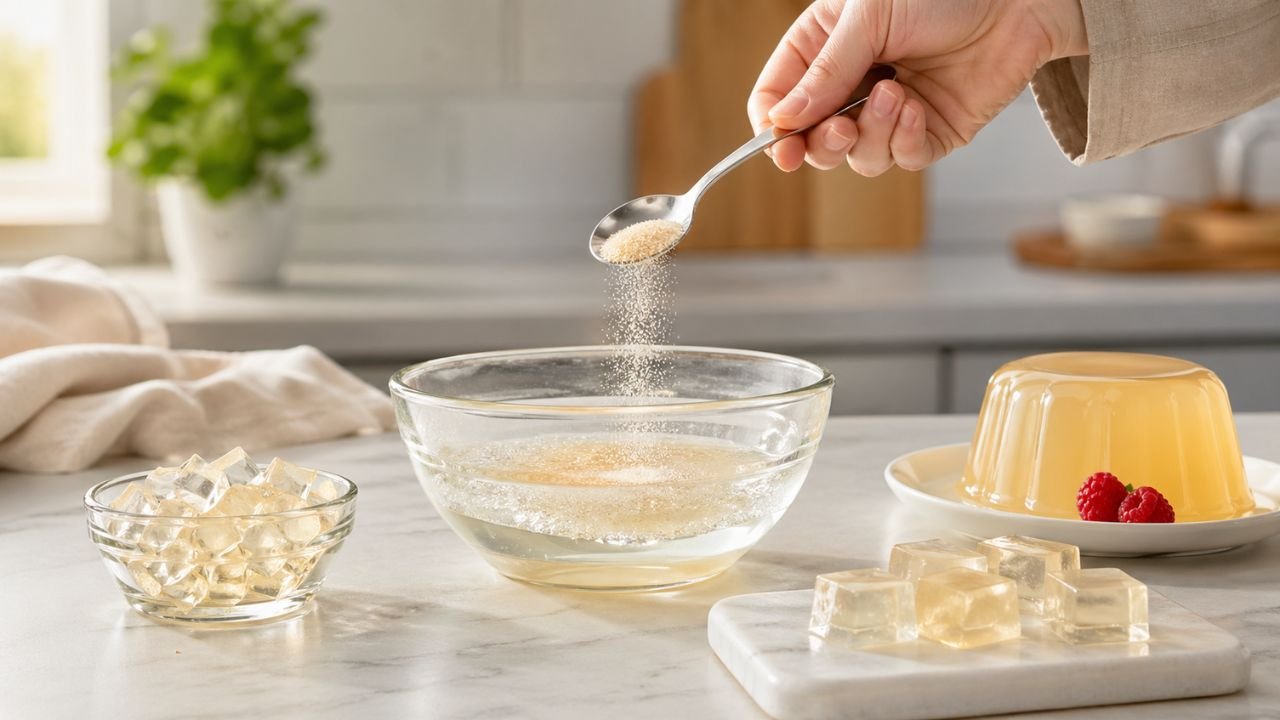
The gelatin trick is a simple, low-calorie protein snack made with unflavored gelatin (and sometimes juice, apple cider vinegar, or salt) consumed before meals to help reduce appetite and support weight management. Independent testing shows it produces modest, consistent results in line with what you’d expect from a pre-meal protein snack — not dramatic, but not zero either. Despite widespread attribution to fitness personality Jillian Michaels, no official recipe from her exists; this is a community-created method that went viral through social media and YouTube.
Key Takeaways
- The gelatin trick is a pre-meal protein snack, not a supplement or medication. It works by providing a small amount of protein (from collagen-based gelatin) that may reduce hunger before eating.
- No celebrity has officially endorsed it. The Jillian Michaels version circulating online is community-created, not a verified formula from her brand.
- Multiple variations exist (basic, cranberry, apple cider vinegar, salted), and independent testing found they all produce results in the same range.
- Results are modest and consistent, not miraculous. Think of it as one small habit, not a standalone solution.
- The salted gelatin variant is a newer twist designed to support GLP-1 and GIP hormone balance.
- By 2026, the trend has matured into a structured, protein-forward snack ritual rather than a passing fad.
- YouTube is the main platform where people learn and share gelatin trick recipes and results.
- It costs very little — unflavored gelatin is inexpensive and widely available.
- It’s not appropriate for everyone, particularly people with certain dietary restrictions or medical conditions.
What Is the Gelatin Trick?
The gelatin trick is a method of mixing unflavored gelatin powder into a liquid — typically water, juice, or a flavored base — and consuming it roughly 15 to 30 minutes before a meal. The idea is that the protein in gelatin (which comes from collagen) creates a mild feeling of fullness, leading to smaller portions at mealtime.
The basic concept isn’t new. Protein’s role in satiety is well-established in nutrition science. What made the gelatin trick go viral was its simplicity: three or fewer ingredients, minimal prep time, and a wave of YouTube tutorials showing people how to do it step by step.
Important distinction: This is not a medical treatment. It’s a dietary habit — closer to having a small cup of broth before dinner than taking a weight-loss pill.
How Did the Gelatin Trick Go Viral?
A recipe attributed to Jillian Michaels began circulating through wellness blogs, social media posts, and YouTube channels. The celebrity name gave it credibility and shareability. But here’s what most people miss: multiple wellness sites covering the trend have confirmed that this is a community-created version, not an official Jillian Michaels formula.
The attribution didn’t change the biology, though. Independent research found that the celebrity-named version produced results consistent with other gelatin trick variations — because the active mechanism (pre-meal protein from gelatin) is the same regardless of whose name is attached.
By 2026, the trend has evolved. Early versions were simple and sometimes messy. Current methods emphasize straightforward preparation, familiar ingredients, and a calm, intention-based approach that fits naturally into daily routines. Some creators now frame it as a mindfulness ritual as much as a nutrition strategy.
What Are the Different Gelatin Trick Variations?
All versions share the same core ingredient — unflavored gelatin powder — but differ in what’s added to it. Here’s a comparison:
| Variation | Ingredients | Claimed Benefit | Taste |
|---|---|---|---|
| Basic | Unflavored gelatin + water | Simple appetite reduction | Neutral, bland |
| Cranberry | Gelatin + unsweetened cranberry juice | Added antioxidants, better flavor | Tart, more palatable |
| Apple cider vinegar (ACV) | Gelatin + water + ACV | Digestive support | Sharp, tangy |
| Salted | Gelatin + water + pinch of salt | GLP-1/GIP hormone support | Savory, broth-like |
Independent testing found that all four variations produced results in the same range. The differences are mostly about taste preference and whether you want the additional ingredients for their own potential benefits.
Decision rule: Choose the basic version if you want the simplest possible routine. Choose cranberry or ACV if taste matters to you. Try the salted version if you’re specifically interested in the hormone-support angle, but understand that the evidence for that specific claim is still emerging.
How to Make the Gelatin Trick: Step-by-Step
Here’s the standard method, based on the most commonly shared recipes across YouTube tutorials and wellness sites:
Ingredients
- 1 tablespoon unflavored gelatin powder (such as Knox or a grass-fed brand)
- 1 cup liquid (water, unsweetened cranberry juice, or warm water with a splash of ACV)
- Optional: pinch of sea salt, squeeze of lemon, small amount of natural sweetener
Steps
- Bloom the gelatin. Add 1 tablespoon of unflavored gelatin to about ¼ cup of cold water. Stir and let it sit for 2 to 3 minutes until it thickens and absorbs the liquid.
- Add warm liquid. Pour ¾ cup of warm (not boiling) water or juice over the bloomed gelatin. Stir until completely dissolved.
- Add extras if desired. Mix in a pinch of salt, a teaspoon of ACV, or a squeeze of lemon.
- Drink it 15 to 30 minutes before a meal. This timing allows the protein to begin signaling satiety before you sit down to eat.
- Be consistent. Most people who report results say they followed the routine daily for at least two to three weeks.
Common Mistakes
- Using flavored gelatin (like Jell-O). Flavored gelatin contains added sugar and artificial ingredients. Use unflavored gelatin only.
- Boiling the liquid. Extremely hot water can break down gelatin’s protein structure. Warm is fine; boiling is not.
- Expecting overnight results. This is a modest dietary habit, not a rapid intervention.
- Skipping meals afterward. The gelatin trick is meant to reduce portion size, not replace meals entirely.
Does the Gelatin Trick Actually Work?
The honest answer: it works modestly, and the mechanism is straightforward.
Independent research described results as “not dramatic, not zero, consistent with the mechanism” [1]. That mechanism is simple: consuming a small amount of protein before a meal can reduce overall calorie intake at that meal. Gelatin provides roughly 6 grams of protein per tablespoon, with almost no fat or carbohydrates.
This is consistent with broader nutrition research showing that protein is the most satiating macronutrient. A pre-meal protein snack — whether it’s gelatin, a hard-boiled egg, or a small serving of Greek yogurt — can help some people eat less without feeling deprived.
What the gelatin trick is NOT:
- A metabolism booster
- A fat burner
- A replacement for balanced nutrition and physical activity
- A clinically proven weight-loss treatment
Who it works best for: People who tend to overeat at meals because they sit down very hungry. The gelatin acts as a buffer, taking the edge off appetite so that portion control feels more natural.
Who it’s not for: Anyone with a gelatin allergy, people following a vegan or vegetarian diet (gelatin is animal-derived), or individuals with kidney issues who need to monitor protein intake. Consult a healthcare provider if you have concerns.
What About the Salted Gelatin Variation?
The salted gelatin trick is a newer evolution that adds a pinch of salt to the basic recipe. Proponents describe it as a “small but powerful adjustment” designed to support GLP-1 and GIP hormone balance.
GLP-1 (glucagon-like peptide-1) and GIP (glucose-dependent insulinotropic polypeptide) are incretin hormones involved in appetite regulation and blood sugar management. They’ve gotten significant attention because of the popularity of GLP-1 receptor agonist medications like semaglutide.
The claim that adding salt to gelatin meaningfully influences these hormones is not yet supported by peer-reviewed clinical trials. The idea has theoretical grounding — sodium and protein both play roles in gut hormone signaling — but the leap from “theoretically plausible” to “proven effective” is significant.
Bottom line: The salted version tastes more like a savory broth, which some people prefer. Whether it has a meaningful hormonal advantage over the basic version remains unproven. Independent testing found all variations produced similar results.
How Long Before You See Results?
A 21-day reality check published in 2026 found that consistent daily use of the gelatin trick — combined with normal eating habits — produced noticeable but modest changes in appetite and portion size within two to three weeks.
Realistic timeline:
- Days 1–3: Getting used to the routine. Most people notice the gelatin’s filling effect immediately but don’t see changes on the scale.
- Days 4–14: Appetite at meals may decrease slightly. Some people report feeling more in control of portions.
- Days 15–21: If the habit is consistent, small changes in eating patterns become more established. Any weight change at this point is typically 1 to 3 pounds, consistent with modest calorie reduction.
These are estimates based on community reports and wellness content, not clinical trial data. Individual results vary based on baseline diet, activity level, and overall calorie balance.
How Does the Gelatin Trick Compare to Other Pre-Meal Strategies?
| Strategy | Cost | Convenience | Protein Content | Evidence Level |
|---|---|---|---|---|
| Gelatin trick | Very low | High (quick prep) | ~6g per serving | Anecdotal + mechanism-consistent |
| Glass of water before meals | Free | Very high | 0g | Supported by some clinical studies |
| Small salad before meals | Low–moderate | Moderate | 1–3g | Supported by clinical studies |
| Protein shake | Moderate | High | 15–30g | Well-supported |
| Bone broth | Low–moderate | Moderate | 6–10g | Anecdotal + mechanism-consistent |
The gelatin trick sits in the middle: cheaper and simpler than a protein shake, slightly more effective for satiety than plain water due to its protein content, but less studied than either.
Pros and Cons of the Gelatin Trick
Pros:
- Inexpensive (a canister of unflavored gelatin lasts weeks)
- Quick to prepare (under 5 minutes)
- Low in calories (roughly 25 calories per serving)
- Provides collagen protein, which may also support skin, joint, and gut health
- Easy to customize with different flavors
- No special equipment needed
Cons:
- Not suitable for vegans or vegetarians
- Results are modest — won’t replace a comprehensive nutrition plan
- Taste can be off-putting in the basic version
- Celebrity attribution creates unrealistic expectations
- Hormone-support claims (especially for the salted version) lack strong clinical evidence
- Not appropriate for people with certain medical conditions without medical guidance
Conclusion
The gelatin trick is a simple, low-cost dietary habit that uses unflavored gelatin as a pre-meal protein snack to reduce appetite. It’s not a miracle solution, and the celebrity attribution that helped it go viral is misleading — but the underlying mechanism is sound. Protein before meals can help with portion control, and gelatin is an affordable, accessible way to get that protein.
If you want to try it, start with the basic version: one tablespoon of unflavored gelatin dissolved in warm water, consumed 15 to 30 minutes before your largest meal. Commit to at least three weeks of daily use before evaluating results. Keep expectations realistic — modest appetite reduction and slightly smaller portions are the most likely outcomes.
For anyone looking for more substantial changes, pair the gelatin trick with a balanced diet and regular physical activity. It works best as one piece of a larger strategy, not the whole plan.
FAQ about Gelatin Trick
Is the gelatin trick the same as the Jillian Michaels gelatin recipe?
The recipe widely attributed to Jillian Michaels is a community-created version that went viral under her name. No official recipe from Jillian Michaels has been verified.
Can I use collagen peptides instead of gelatin?
Yes, but the texture will be different. Collagen peptides dissolve completely and won’t gel, so you’ll get a thin liquid instead of a slightly thickened drink. The protein content is similar.
How many calories are in the gelatin trick?
Approximately 25 calories per tablespoon of unflavored gelatin. Adding juice or other ingredients increases the calorie count slightly.
Is the gelatin trick safe?
For most healthy adults, yes. Unflavored gelatin is a common food ingredient. However, people with kidney disease, gelatin allergies, or specific dietary restrictions should consult a doctor first.
Can I do the gelatin trick more than once a day?
Most tutorials suggest once daily, before the largest meal. Some people do it twice. There’s no established upper limit, but more gelatin doesn’t necessarily mean better results.
Does the type of gelatin matter?
Grass-fed or pasture-raised gelatin is often recommended by wellness creators, but standard unflavored gelatin (like Knox) works the same way for appetite purposes.
Will the gelatin trick help me lose weight?
It may help reduce portion sizes, which can contribute to a calorie deficit over time. But it’s one small tool, not a standalone weight-loss solution.
Why is salt added in the newer version?
The salted variation is claimed to support GLP-1 and GIP hormone balance. This claim is not yet backed by peer-reviewed research.
How long should I try it before deciding if it works?
Most community reports suggest at least 21 days of consistent use.
Is there a vegan alternative?
Agar-agar (derived from seaweed) can mimic gelatin’s texture, but it doesn’t provide the same collagen-based protein. The satiety mechanism would be different.