

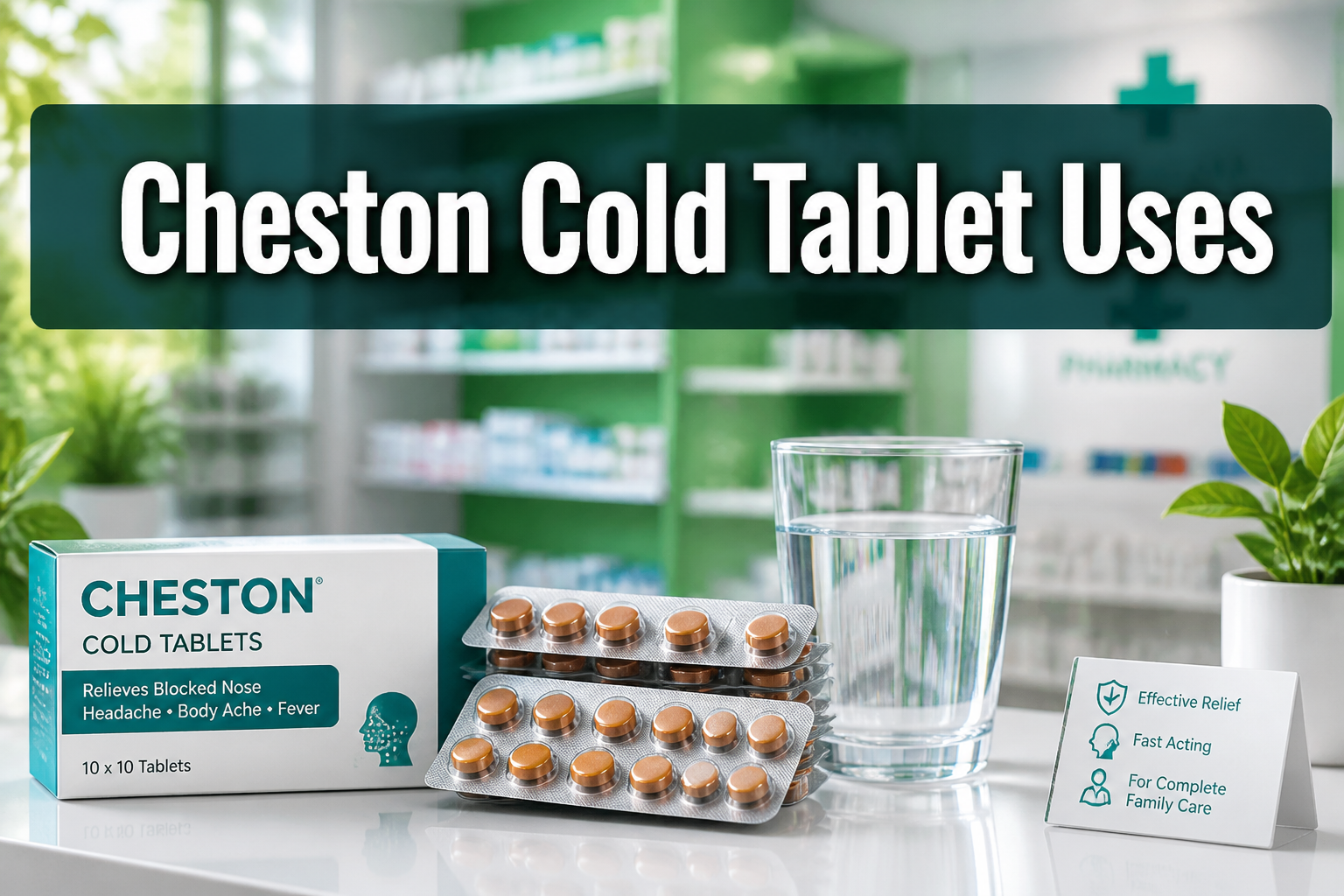
Cheston Cold Tablet is a fixed-dose combination (FDC) medicine containing cetirizine, phenylephrine, and paracetamol. It’s used to relieve common cold and allergy symptoms including runny nose, nasal congestion, sneezing, headache, and mild fever. It works best as a short-term remedy and is not suitable for everyone, particularly those with high blood pressure, liver disease, or during pregnancy.
Key Takeaways
- Three active ingredients work together: cetirizine (antihistamine), phenylephrine (decongestant), and paracetamol (pain and fever reducer)
- Primary Cheston Cold Tablet uses include nasal congestion, runny nose, sneezing, sinus headache, and mild fever from colds or allergies
- Not recommended for people with hypertension, liver problems, or during pregnancy
- Short-term use only — typically 3 to 5 days unless directed otherwise by a doctor
- User effectiveness ratings on major pharmacy platforms show about 46% average effectiveness, with 34% rating it excellent
- Price point: approximately ₹36 for 10 tablets (as of April 2026), making it affordable but not the cheapest option
- Regulatory context: Some Cheston Cold variants have faced scrutiny under India’s FDC review process, though the standard formulation remains available
- Alternatives exist: Single-ingredient medicines like Dolo 650 or Crocin Advance may be safer for targeted symptom relief
- Common side effects include drowsiness, dry mouth, and dizziness — avoid driving after taking it
- Always consult a doctor if symptoms persist beyond a week or worsen
What Are Cheston Cold Tablet Uses?
Cheston Cold Tablet uses center on multi-symptom relief for the common cold and upper respiratory allergies. Each tablet combines three ingredients that target different symptoms simultaneously, making it a go-to option for people who want a single pill instead of three separate medicines.
The core conditions it addresses:
- Common cold — runny nose, sneezing, nasal blockage, and mild fever
- Allergic rhinitis — histamine-triggered sneezing, itching, and watery eyes
- Sinusitis symptoms — pressure headaches and nasal congestion
- Mild fever — low-grade temperature spikes that accompany viral infections
- Body ache — muscle soreness and headache linked to cold or flu
“Cheston Cold is designed for the kind of morning when your nose won’t stop running, your head feels heavy, and you still have to get through a full workday.”
Each ingredient handles a specific job. Cetirizine blocks histamine receptors to stop allergic reactions. Phenylephrine constricts blood vessels in the nasal passages to reduce swelling and improve airflow. Paracetamol brings down fever and eases pain. Together, they cover the most disruptive symptoms of a cold in one dose.
How Does Each Ingredient in Cheston Cold Work?
Understanding the mechanism helps explain both why the tablet works and why it carries certain risks.
| Ingredient | Role | Mechanism |
|---|---|---|
| Cetirizine (5mg) | Antihistamine | Blocks H1 receptors; reduces sneezing, runny nose, itching |
| Phenylephrine (10mg) | Decongestant | Constricts nasal blood vessels; reduces swelling and blockage |
| Paracetamol (325mg) | Analgesic/Antipyretic | Reduces fever; relieves headache and body ache |
Cetirizine is a second-generation antihistamine, meaning it causes less sedation than older antihistamines like chlorpheniramine. Still, drowsiness is possible, especially at higher doses.
Phenylephrine is the ingredient that raises the most safety flags. It raises blood pressure by constricting blood vessels throughout the body, not just in the nose. For healthy adults, this effect is mild and temporary. For someone with hypertension or heart disease, it can be problematic.
Paracetamol at 325mg per tablet is a relatively moderate dose, but it adds up quickly if someone is also taking other paracetamol-containing medicines (like Dolo 650 or Crocin). Exceeding 4,000mg of paracetamol per day risks serious liver damage.
Who Should (and Should Not) Take Cheston Cold Tablet?
Cheston Cold Tablet uses are appropriate for a specific group of adults with mild, short-term cold or allergy symptoms. It’s not a universal remedy.
Good candidates:
- Adults aged 18 and above with common cold symptoms
- People needing multi-symptom relief in a single tablet
- Short-term use (3 to 5 days) without underlying health conditions
Avoid Cheston Cold if you:
- Have high blood pressure (phenylephrine can raise it further)
- Have liver disease or heavy alcohol use (paracetamol risk)
- Are pregnant or breastfeeding (both phenylephrine and cetirizine carry caution advisories)
- Have narrow-angle glaucoma or urinary retention
- Are taking MAO inhibitors or other decongestants
- Have a known allergy to any of the three active ingredients
For children: Cheston Cold has a separate pediatric formulation (syrup). The adult tablet is not appropriate for young children. Always check with a pediatrician before giving any cold medicine to a child under 12.
Edge case to watch: Someone already taking a paracetamol-based pain reliever for a headache and then adding Cheston Cold is doubling up on paracetamol. This is one of the most common accidental overdose scenarios with FDC cold medicines.
What Are the Common Side Effects?
Most people tolerate Cheston Cold well for short-term use. But side effects are real and worth knowing before the first dose.
Frequent side effects:
- Drowsiness or sedation (from cetirizine)
- Dry mouth, nose, or throat
- Dizziness or light-headedness
- Mild nausea or stomach upset
- Difficulty urinating (more common in older men)
Less common but more serious:
- Elevated blood pressure (phenylephrine effect)
- Rapid or irregular heartbeat
- Allergic skin reactions (rash, itching)
- Liver stress with prolonged or high-dose use
Practical tip: Take Cheston Cold after food to reduce stomach irritation. Avoid alcohol entirely while on this medication — alcohol amplifies both the sedative effect of cetirizine and the liver burden from paracetamol.
How Should Cheston Cold Tablet Be Taken?
The standard adult dose is one tablet, two to three times daily, taken with water, preferably after meals. Do not crush or chew the tablet.
Step-by-step usage guide:
- Confirm your symptoms match what Cheston Cold treats (cold, allergy, congestion, mild fever)
- Check you’re not already taking another paracetamol-containing medicine
- Take one tablet after a meal with a full glass of water
- Space doses at least 6 to 8 hours apart
- Do not exceed 3 tablets in 24 hours
- Stop after 5 days if symptoms haven’t improved and consult a doctor
- Avoid driving or operating heavy machinery until you know how the tablet affects your alertness
Common mistake: Taking an extra tablet because “one didn’t seem to work fast enough.” Phenylephrine and cetirizine both take 30 to 60 minutes to reach peak effect. Stacking doses too quickly increases side effect risk without speeding up relief.
How Does Cheston Cold Compare to Alternatives?
Several options compete in the same space. The right choice depends on which symptoms are most severe and whether any health conditions rule out certain ingredients.
| Medicine | Key Ingredients | Best For | Approx. Price (2026) |
|---|---|---|---|
| Cheston Cold | Cetirizine + Phenylephrine + Paracetamol | Multi-symptom cold relief | ₹36 / 10 tabs |
| Dolo 650 | Paracetamol 650mg | Fever and body ache only | ₹25.7 / 15 tabs |
| Crocin Advance | Paracetamol 500mg | Mild fever and headache | ₹17 / 20 tabs |
| Kuffery Cold | Caffeine + Chlorpheniramine + Paracetamol | Cold relief, budget option | ₹11 / 10 tabs |
| Saridon | Paracetamol + Propyphenazone + Caffeine | Headache and mild pain | ₹44 / 10 tabs |
Choose Cheston Cold if you have multiple symptoms at once (congestion + fever + sneezing) and no blood pressure concerns.
Choose Dolo 650 or Crocin if fever or body ache is the main problem and you want to avoid the decongestant risk.
Choose a single antihistamine (like plain cetirizine 10mg) if sneezing and runny nose are the only issues.
Indian health experts and regulators have long debated whether FDC cold medicines like Cheston offer genuine therapeutic advantages over targeted single-ingredient therapy. The convenience argument is real, but so is the risk of unnecessary exposure to ingredients a patient may not need.
What Does the Regulatory Landscape Look Like in 2026?
This is where Cheston Cold’s story gets more complicated. India has been reviewing and banning FDCs since 2014, with over 499 combinations flagged for lacking clear therapeutic justification. A significant 2024 action banned 156 FDC drugs, affecting the cold medicine market broadly.
As of May 2026, the standard Cheston Cold formulation remains available and is confirmed on pharmacy platforms. However, a March 2026 government alert on unapproved FDCs (not specifically naming Cheston Cold) signals that scrutiny of combination cold medicines continues.
What this means for consumers:
- Cheston Cold is currently legal and available
- Some variant formulations may have different regulatory status — check the pack for exact composition
- The broader policy direction favors single-ingredient medicines for targeted use
- When in doubt, ask a pharmacist whether the specific pack you’re buying is a currently approved formulation
Frequently Asked Questions About Cheston Cold Tablet Uses
Q: Can Cheston Cold be taken for a sore throat?
Cheston Cold does not contain any ingredient specifically for sore throat pain. Paracetamol may reduce associated discomfort, but a dedicated throat lozenge or gargle is more effective for throat symptoms.
Q: Is Cheston Cold safe to take daily for chronic allergies?
No. Cheston Cold is designed for short-term use. For chronic allergic rhinitis, a doctor may prescribe a daily antihistamine (like cetirizine alone) without the decongestant and paracetamol components.
Q: Can Cheston Cold be taken with antibiotics?
In most cases, yes, but always confirm with a doctor or pharmacist. Some antibiotic combinations interact with paracetamol or antihistamines, particularly if the antibiotic is metabolized by the liver.
Q: How quickly does Cheston Cold start working?
Most users notice symptom relief within 30 to 60 minutes of taking the tablet. Nasal congestion may take slightly longer to clear than sneezing or runny nose.
Q: Can someone with diabetes take Cheston Cold?
The tablet itself doesn’t contain sugar, but phenylephrine can affect blood sugar regulation indirectly. People with diabetes should consult their doctor before use.
Q: Is Cheston Cold the same as Cheston Cold Total?
No. Cheston Cold Total is a different formulation with additional or modified ingredients. Always read the label to confirm the exact composition before taking either product.
Q: What happens if a double dose is taken accidentally?
If someone takes two tablets too close together, monitor for elevated heart rate, dizziness, or signs of liver stress (nausea, abdominal pain). Contact a poison control center or doctor if symptoms appear. Paracetamol overdose is the main concern.
Q: Can Cheston Cold cause dependency?
No physical dependency is associated with Cheston Cold. However, some people develop a habit of reaching for it at the first sign of a cold, which can lead to unnecessary paracetamol and phenylephrine exposure over time.
Q: Is it safe to take Cheston Cold before bed?
Yes, and many people prefer it at night because cetirizine’s mild sedative effect can actually help with sleep disrupted by congestion. Avoid taking it right before driving.
Q: Does Cheston Cold treat COVID-19 symptoms?
Cheston Cold may relieve some overlapping symptoms like runny nose, congestion, and mild fever, but it does not treat the underlying viral infection. Anyone suspecting COVID-19 should follow current health authority guidelines and consult a doctor.
Conclusion
Cheston Cold Tablet uses are well-defined: it’s a short-term, multi-symptom cold and allergy reliever that combines three proven ingredients in one convenient dose. For a healthy adult dealing with a typical cold, it delivers real relief — congestion clears, sneezing slows, and fever eases.
But convenience comes with trade-offs. The phenylephrine component makes it unsuitable for people with blood pressure issues. The paracetamol content requires careful attention to avoid accidental double-dosing. And India’s ongoing FDC regulatory reviews mean consumers should stay informed about which formulations remain approved.
Actionable next steps:
- Match the medicine to your symptoms — if fever is the only issue, a simple paracetamol tablet is safer and cheaper
- Read the full ingredient list on the pack before buying, especially if you’re already taking other medicines
- Limit use to 3 to 5 days and see a doctor if symptoms persist or worsen
- Check your blood pressure status before using any decongestant-containing medicine
- Ask a pharmacist in 2026 whether the specific Cheston Cold variant you’re buying is currently approved under Indian drug regulations
Cold season will always come around. Having the right information about what Cheston Cold actually does — and doesn’t do — is the most practical preparation anyone can make.